
“la Biagiola”: a multi-period archaeological site in the heart of the Sovana countryside
Thousands of years of history preserved within a few meters of stratigraphy
Just a few miles from Sovana, on the Pianetti plateau, lies a place where much of the history of this landscape seems to have been compressed into just a few thousand square meters—and often into only a few centimeters of soil.
This is La Biagiola, one of the archaeological sites most closely connected with the history of the Associazione “Cultura e Territorio” (ACT) and our archaeology field school.
Its importance does not depend on a single exceptional monument. What makes La Biagiola remarkable is its long and complex history of occupation. The site was repeatedly used, transformed, abandoned, and reoccupied over many centuries.
Studying La Biagiola therefore means observing, in one place, how the countryside around Sovana changed through time.
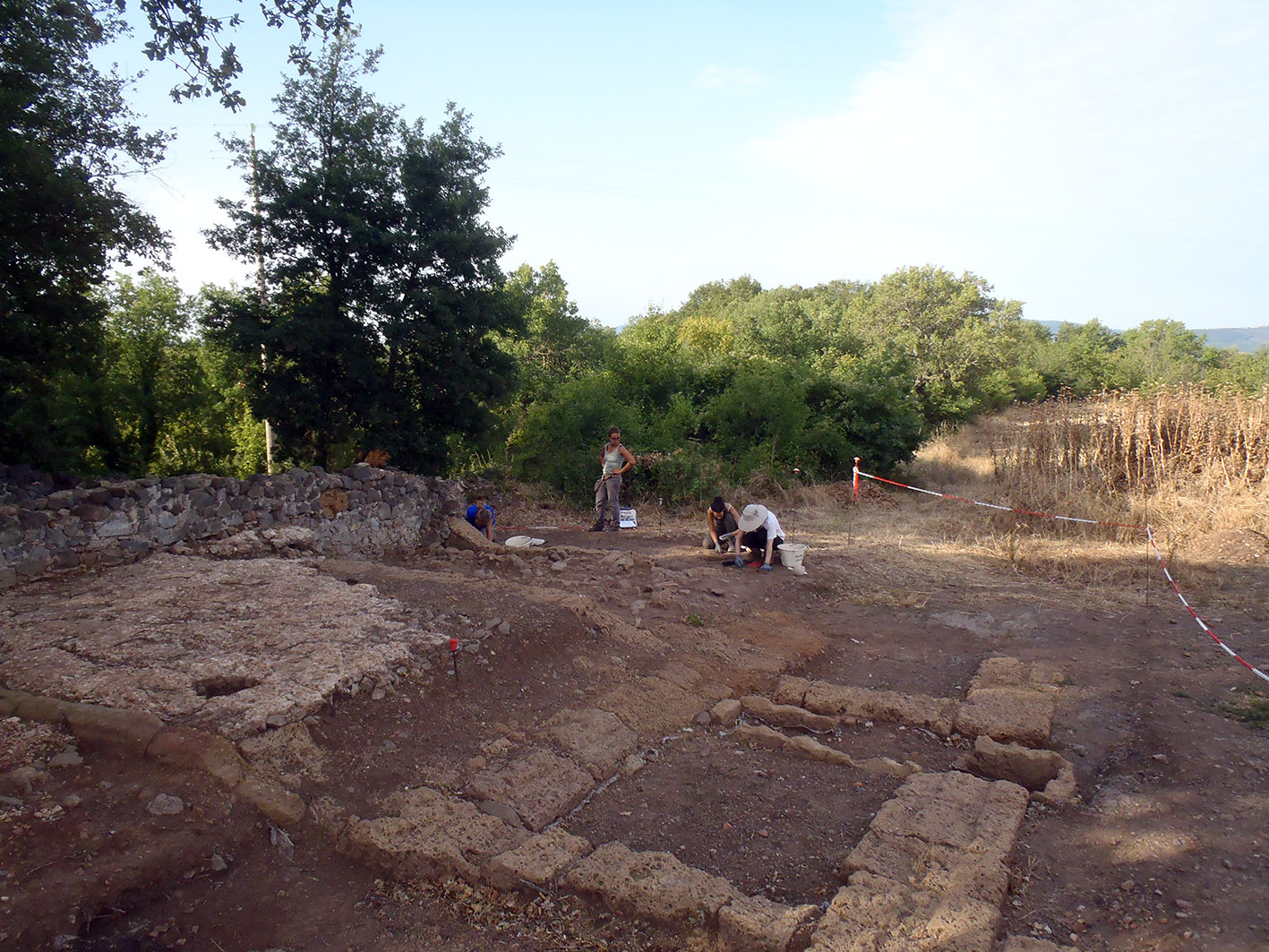
A Landscape Through Time
The earliest traces of human activity may date back to Protohistory. The plateau was later occupied during the Etruscan period, and the artifacts recovered from the site document a long history of use.
This early phase is also one of the most difficult to interpret. Later construction profoundly altered the older archaeological layers. The major building program of the Roman period appears to have involved extensive leveling, which partially erased what had existed before.
What is clear, however, is that substantial earlier structures were already present, built with large blocks of non-local yellow tuff. The leveling deposits also contained numerous ceramic finds, including storage vessels, together with decorated architectural terracottas.
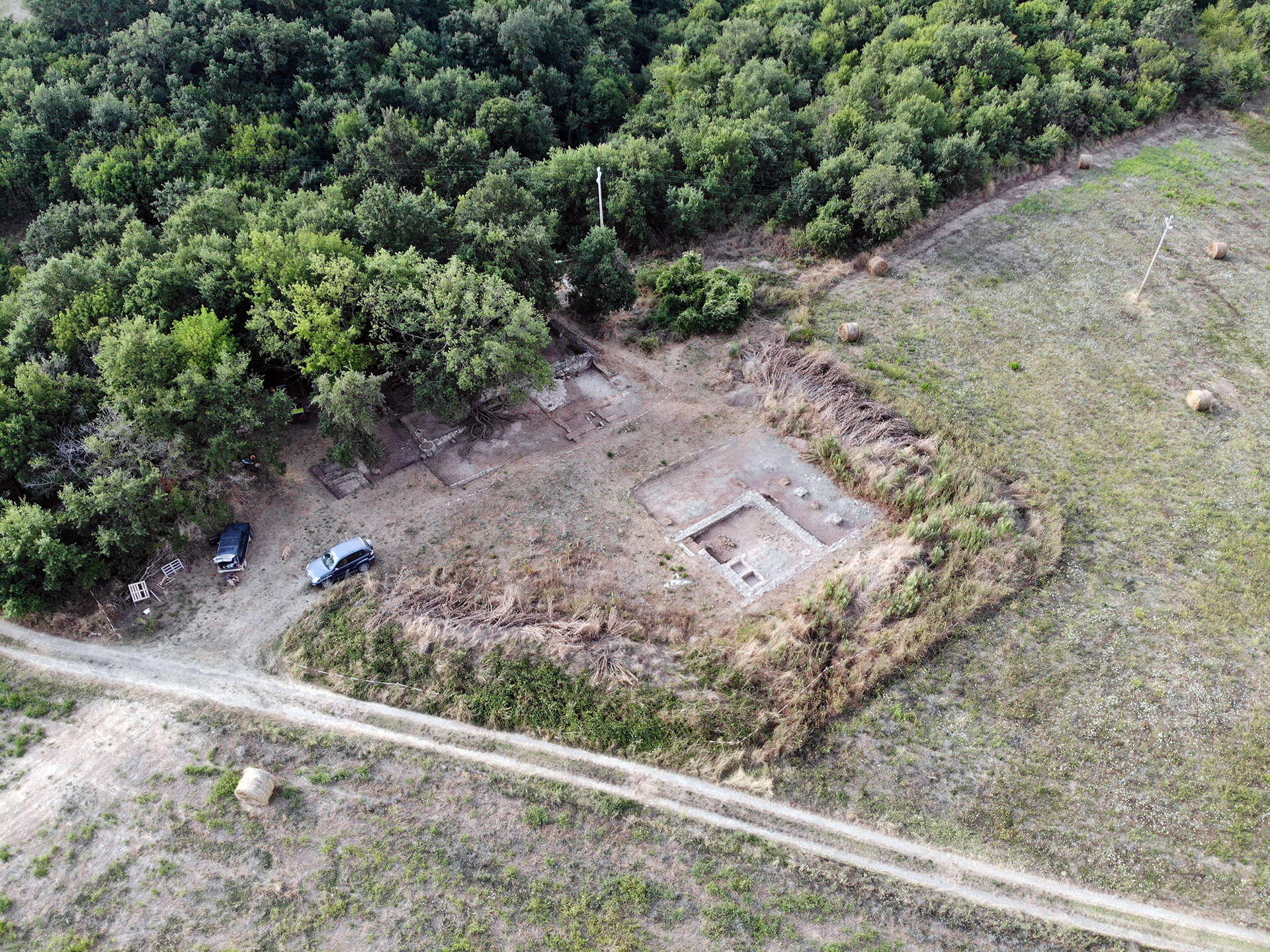
The Roman Villa
During the Roman period, the site was radically reorganized with the construction of a villa.
Important sections of masonry still survive, including walls built in opus reticulatum and opus quasi reticulatum. Excavation also identified part of the pars rustica, the area devoted to agricultural production and storage.
Among the features discovered were a cistern, a silo, settling basins, and traces of large dolia, storage vessels used for agricultural produce. Together, these structures provide a direct glimpse into the economy of a Roman rural estate.
A more monumental part of the complex also existed, although later transformations make it more difficult to reconstruct. Column bases and elements associated with a Roman bath complex are among the evidences that have been identified.

The Early Medieval Cemetery
The history of the site did not end with the abandonment of the Roman villa.
After Late Antiquity, an early medieval cemetery was established among the remains of the earlier structures. The first graves were identified during investigations by the Gruppo Archeologico Torinese, which worked on the Pianetti plateau as part of a wider archaeological survey project. Some burials contained grave goods attributable to Lombard culture.
Although later ACT field seasons considerably expanded our knowledge of the cemetery, important questions remain unanswered.
Where did the people buried at La Biagiola live? Was the cemetery associated with a church or another religious building nearby?
These are still central research questions.
From Farmstead to the Modern Period
After the cemetery went out of use, the surviving structures were once again occupied and transformed.
In the post-medieval period, a farmhouse developed on the site and gradually became an increasingly utilitarian rural building associated with agricultural activity.
The archaeological record extends almost into the present day. Excavation documented traces of everyday activities carried out among the ruins of the old farmhouse, including evidence related to cheese production.
This long sequence of transformations is precisely what makes La Biagiola distinctive.
A Window onto the History of Sovana
Sovana is famous for its Etruscan necropolises, its rock-cut roads, the vie cave, and its medieval town center.
Much less is known, however, about the countryside that surrounded the town and the people who lived in it, cultivated it, and transformed it.
La Biagiola offers a rare opportunity to explore that history.
Protohistoric activity, Etruscan occupation, the organization of the Roman countryside, transformations during Late Antiquity, an early medieval cemetery, post-medieval rural settlement, and modern use of the site are not simply a sequence of historical periods.
They represent different ways of using the same landscape.
It is significant that La Biagiola itself was identified during the archaeological surveys carried out by the Gruppo Archeologico Torinese on the Pianetti plateau. Those investigations were designed to understand changing patterns of settlement and land use through systematic field survey and led to the discovery of numerous Protohistoric and Roman sites.
In this sense, La Biagiola is more than an archaeological site.
It is a cross-section through the history of the landscape around Sovana.
Why La Biagiola Is an Ideal Training Site
For many years, La Biagiola has also been an exceptional place in which to learn archaeology.
A multi-period site constantly confronts students with one of the fundamental principles of the discipline: what we uncover does not necessarily belong to the same period, nor did it necessarily serve the same function throughout its history.
A Roman wall may be reused centuries later. A grave may cut through an earlier structure. A modern building may incorporate ancient masonry. A layer may contain older artifacts because soil and objects were moved during later transformations.
Excavation therefore means learning to recognize these relationships before attempting to assign them a name or a date.
This is what made La Biagiola so valuable as a training site: it taught students not only how to excavate, but why archaeological excavation must be carried out in a particular way.

Research History
Archaeological research at La Biagiola began with investigations by the Gruppo Archeologico Torinese (GAT) between 2004 and 2011, as part of a broader program of archaeological survey and field research in the Sovana area. From 2012 to 2019, the site was investigated by the Associazione Cultura e Territorio (ACT) through stratigraphic excavation, documentation, and research activities. Since 2026, work at La Biagiola has entered a new phase focused on site maintenance, archaeological recording, and non-destructive prospection, with investigations currently ongoing.
Research Continues
Today, ACT is no longer conducting stratigraphic excavation campaigns at La Biagiola.
After many years of excavation and research, our work now focuses primarily on routine maintenance, archaeological documentation, and non-invasive investigation.
Our new permit for non-invasive research allows us to continue studying both the site and the surrounding landscape through archaeological survey and non-destructive prospection methods.
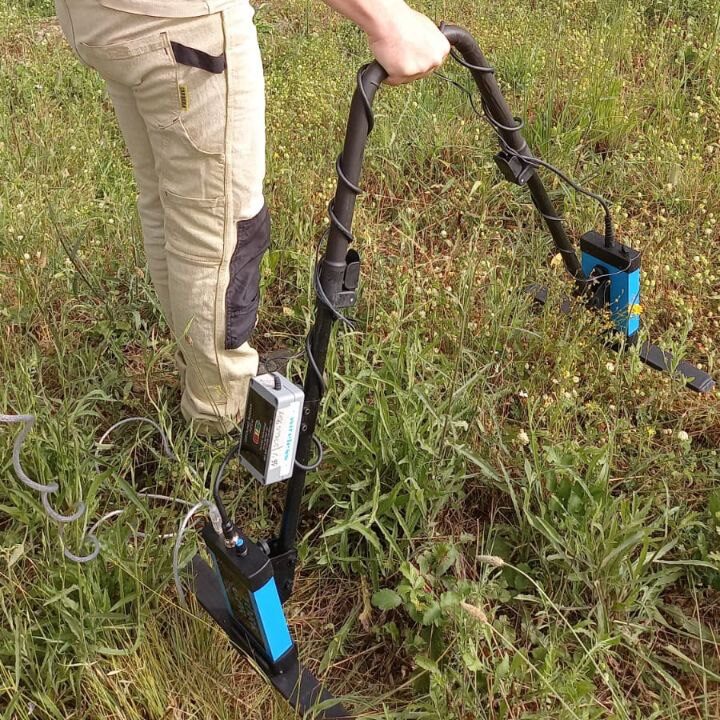
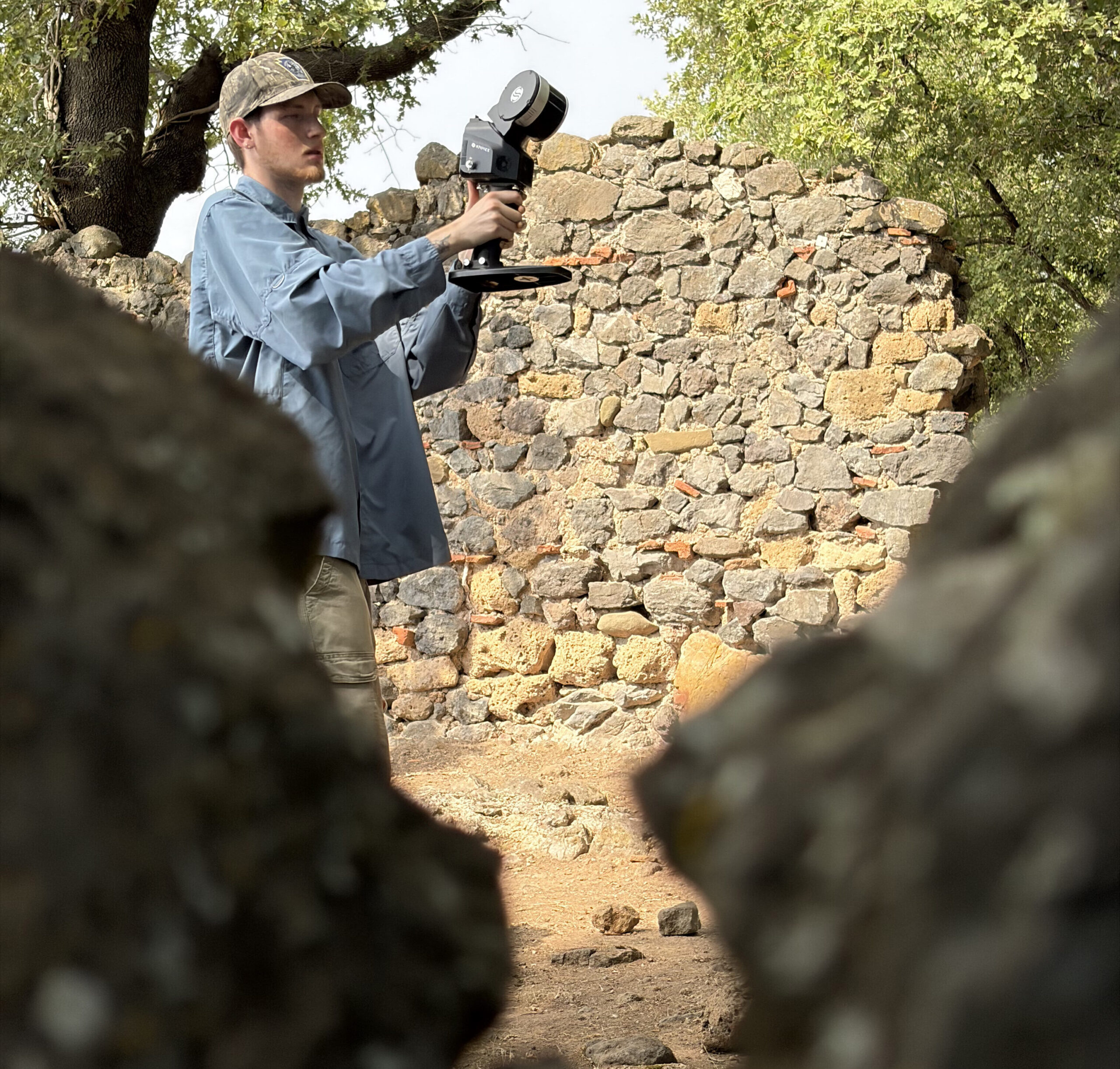
This marks an important new phase.
Before opening new excavation areas, we can work to understand more clearly what lies around and beneath the areas already investigated. This allows us to formulate more precise research questions and plan future excavations on a stronger basis. Because our goal remains to return to archaeological excavation at La Biagiola.
Not simply to uncover new structures, but to answer the many questions the site continues to raise: to better understand the Etruscan settlement, define the organization and extent of the Roman villa, identify the context associated with the early medieval cemetery, and reconstruct the later transformations of the rural settlement.
After so many years of research, La Biagiola still preserves many parts of its history that we are not yet able to tell, and that is exactly why we continue to study it.