Rocca Tédula: The Archaeology of a Castle and Its Territory
From Community Concern to Archaeological Discovery:
Rethinking a Familiar Medieval Landmark
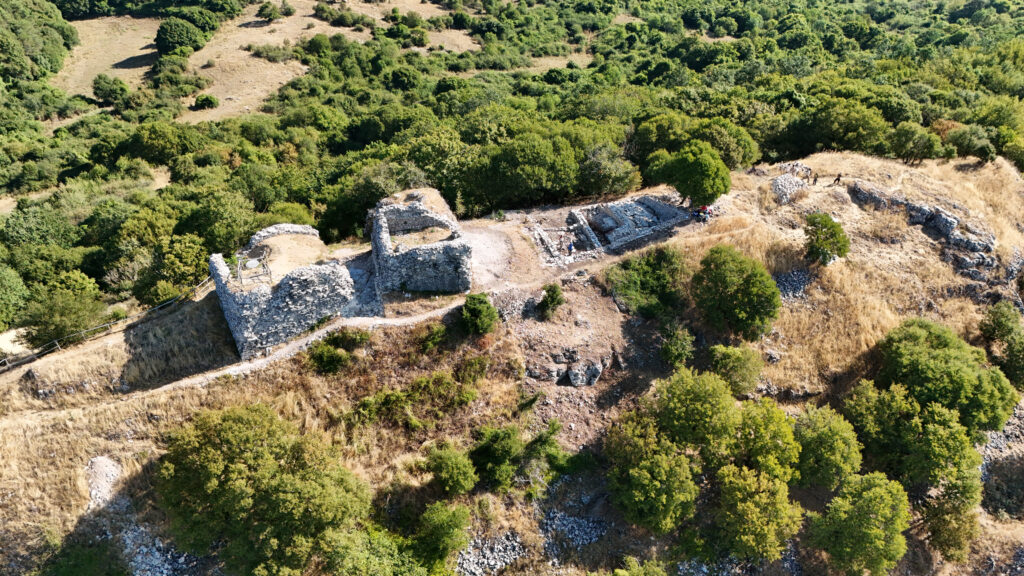
On an unnamed hilltop overlooking the surrounding valleys and landscape as far as the eye can see, within the Montevitozzo civic lands, the ruins of the Roccaccia have been a familiar landmark for generations: a destination for walks, local stories, and community memories, yet never the subject of a systematic archaeological investigation.
That changed in 2025. Plans for major industrial wind-energy development in the immediate vicinity of the Rocca prompted a strong response from the Montevitozzo community and the local civic land authority. Out of that mobilization came a research project: to turn a heritage-protection issue into an opportunity to finally understand what the Roccaccia had been and what role it had played in the history of this territory. With Ministerial Research Concession No. 868, issued on June 5, 2025, ACT began the first systematic campaigns of archaeological survey, documentation, and excavation at the site.
And from the very first field seasons, the Rocca proved far more complex than we had imagined.
A Contested Stronghold
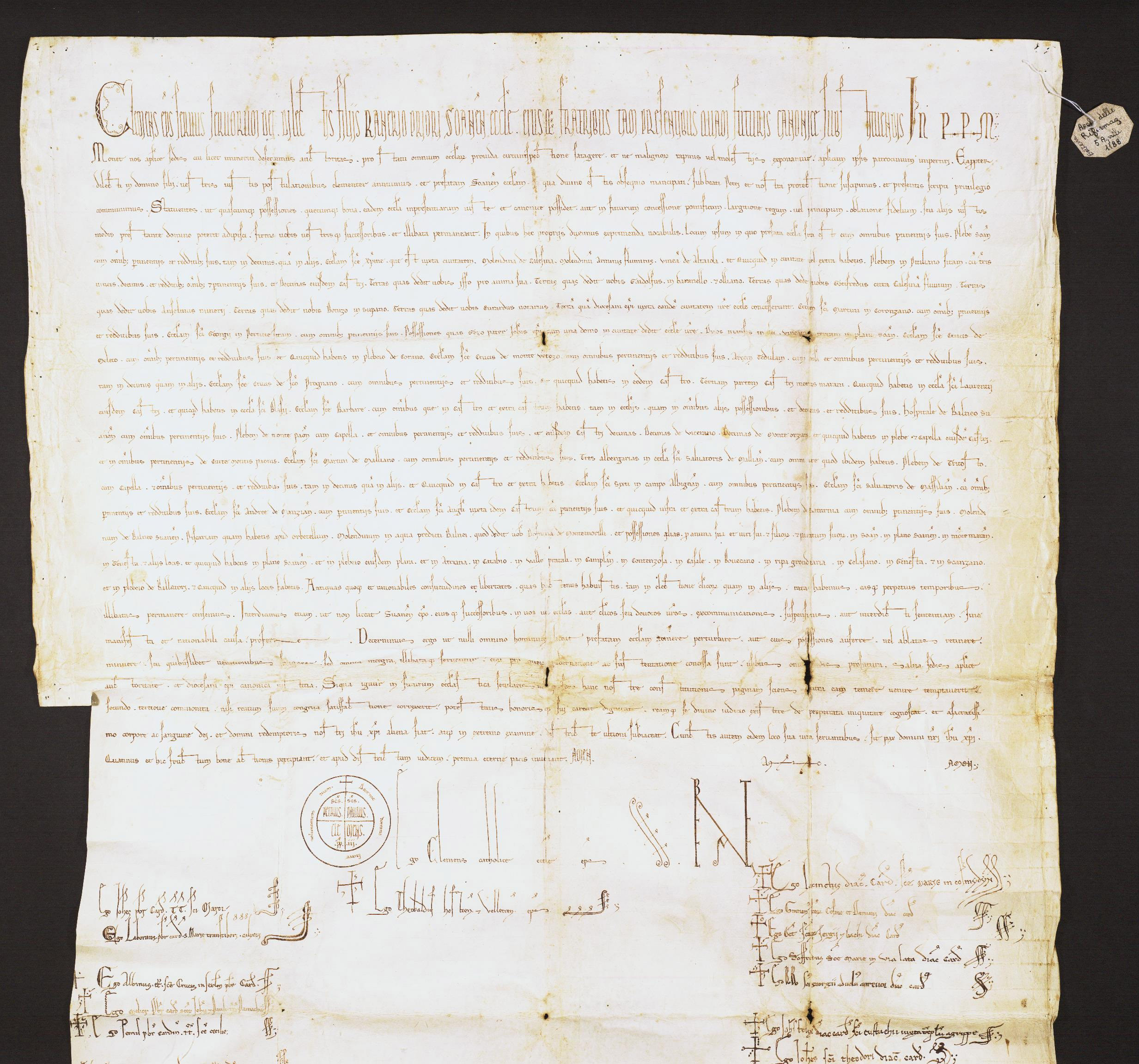
Its original name, Rocca Tédula, first appears in 1188, in a papal bull issued by Pope Clement III to the canons of Sovana. The document mentions the Rocca together with its church, appurtenances, and revenues, showing that by the late twelfth century it was not simply an isolated tower, but the center of an already organized territory.
In 1216, Montevitozzo appears in the division of the Aldobrandeschi domains as the center of a curia et districtus that included several settlements in the surrounding area. Over the following centuries, the Rocca repeatedly changed hands and became involved in the competition among the Aldobrandeschi, later the Orsini, Orvieto, Siena, the lords of Montorio, and other powers of southern Tuscany. In 1305 it was besieged and captured by Orvieto; further conflicts followed during the fourteenth century, and in 1381 it entered Siena’s sphere of influence. The documentary sources therefore reveal a history that was anything but marginal, closely tied to the control of a strategic corridor between Mount Amiata, the Maremma, northern Lazio, and the territory of Orvieto.
Between the late fifteenth and early sixteenth centuries, the military role of the old Rocca appears to have gradually declined, while Montevitozzo became integrated into the domains of the Orsini of Pitigliano. In the seventeenth century, the territory passed first under Medici control and then to the Barbolani of Montauto, who received Montevitozzo as a marquisate.
The Rocca, however, did not immediately disappear from the landscape. Eighteenth-century maps still identify it as Castello Antico—“Ancient Castle”—depicting a prominent tower surrounded by other buildings. It is a particularly intriguing image in light of what archaeological excavation is now bringing back to light.
Not Just a Tower, but a Fortified Settlement
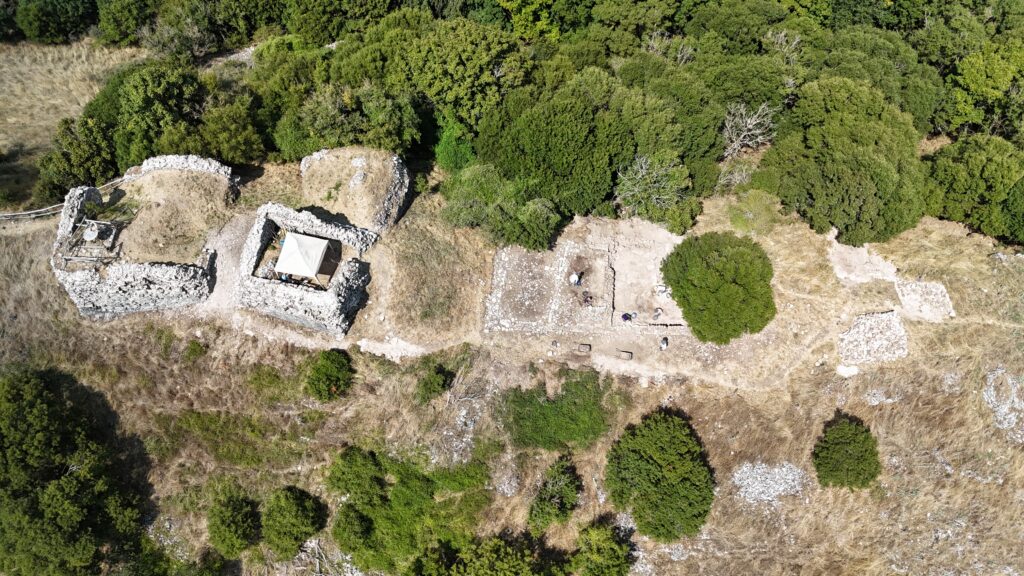
Before our investigations began, the Roccaccia was generally understood primarily as a fortification: a tower, a few standing walls, and the remains of an enclosure.
Archaeological survey, topographic mapping, drone photogrammetry, laser scanning, DTM analysis, architectural study, and stratigraphic excavation have revealed a very different picture.
The fortifications enclosed an area of roughly half a hectare, but structures belonging to the settlement also extended beyond them. At the summit stood the main fortified complex, a kind of keep far more elaborate than it first appeared: a square tower with no ground-floor entrance, a large building we have provisionally called the Palazzo, a courtyard, and additional structures that have yet to be fully defined. The walls of the Palazzo, built with carefully squared and finished stone blocks, display a level of construction consistent with residential and representative functions.
Around this core, however, was something even more interesting: a village.
On the southern slope we have identified numerous structures, some of which appear to have been partially cut directly into the limestone hillside. Roads and passageways made use of cuts in the bedrock, while the defensive wall followed the natural shape of the escarpment, strengthening the most accessible sectors and relying on natural defenses where the slope itself provided sufficient protection.
The Rocca Tédula now emerging from our investigations was therefore not simply a place where a handful of soldiers watched over the surrounding countryside. It was a small but complex settlement, where military, administrative, residential, domestic, and productive activities existed side by side.
Living and Working at the Rocca
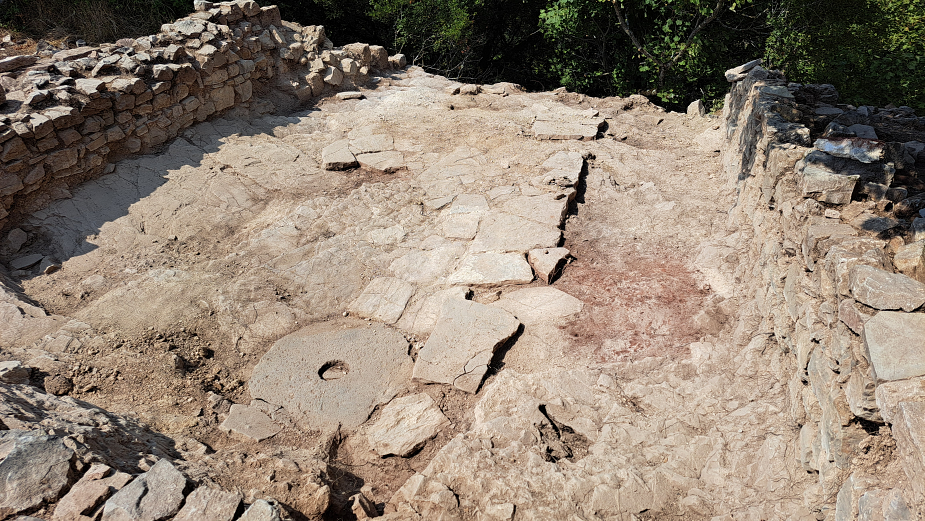
The excavation of Building 1, located outside the main fortified complex, has played a decisive role in shaping our interpretation of the site.
This utilitarian building, more than twenty meters long and divided into several rooms, served a range of functions connected with storage, food processing, and craft production. Basins, channels cut into the bedrock, postholes, hearths, carbonized grain, animal remains, and tools are gradually revealing small fragments of everyday life at the Rocca.
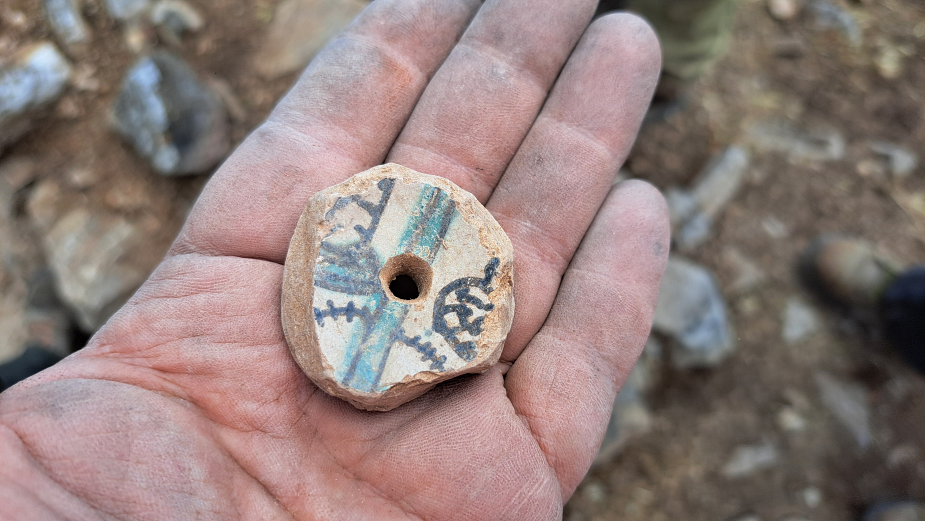
Particularly significant is the evidence for textile production. Several fragments of archaic maiolica pottery were carefully trimmed and perforated to be reused as spindle whorls: extremely simple objects, but when considered alongside other similar finds, they provide clear evidence that spinning took place at the settlement. Subsequent field seasons have produced additional evidence that is beginning to raise broader questions about wool processing and the role these activities may have played in the local economy.
Pottery, too, is much more than a tool for dating archaeological layers. The quantities, forms, origins, and technological characteristics of ceramic finds allow us to reconstruct patterns of consumption and trade, while also opening new questions about the possible presence of local craft activities related to ceramic production.
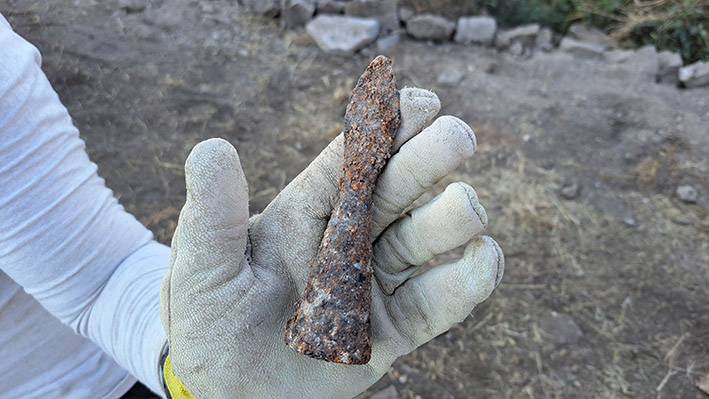
Weapons and projectiles are present as well. Arrowheads, crossbow bolt heads, and a pikehead inevitably remind us of the Rocca’s military role, but they do not dominate the archaeological record. What is emerging most clearly is the life of a community.
The Questions That Remain
Every field season, of course, answers some questions while raising many others.
How was the village organized? How many people could have lived at the Rocca, and what was the relationship between their homes, productive buildings, and the elite fortified complex?
And above all: where was the church already documented in 1188? Some structures identified in the Bellino Valley may belong to an apsidal building, but at present we cannot determine whether they are in fact the remains of the Rocca’s medieval church.
Another question may take us even further back in time. Beneath several medieval structures, we have identified cuts, channels, and drainage systems carved directly into the limestone bedrock. In Building 1, one of these channels clearly predates the walls built above it.
But by how much?
Does it belong to an earlier phase in the organization of the medieval Rocca, or does it preserve evidence of occupation on the hilltop before the Middle Ages? For now, we do not know. And that is precisely one of the questions that future field seasons will seek to answer.
The Future of Rocca Tédula
Excavations will continue in the coming years. The historical and archaeological importance of the complex is now clear, but we still know only a portion of the settlement.
Future research will aim to establish the chronology of the different construction phases, understand the organization of the village and its productive areas, investigate the fortified core in greater depth, and locate the church. But from the beginning, the project has also had another goal.
The Rocca should once again become a place for the community.
For this reason, research, heritage protection, and public engagement are being developed together. Site visits, updates on ongoing fieldwork, and the participation of local residents are not side activities attached to the excavation: they are an integral part of the project itself.
The long-term goal is to make Rocca Tédula the archaeological center of the planned Montevitozzo Civic Lands Park: a place where research can continue, but also a starting point from which to tell the story of the landscape, history, and communities of this part of the Maremma del Tufo.
Because the place that for centuries was known simply as “the Roccaccia” is revealing something very different: not the ruins of a forgotten tower, but the remains of one of the key centers in the organization of the medieval landscape.