Safety, Health, and Equipment
Participants should review the following safety, health, insurance, vaccination, clothing, and equipment requirements before applying.
Safety First!
All ACT activities are conducted in accordance with applicable Italian health and safety legislation, including Italian Legislative Decree No. 81 of April 9, 2008, and subsequent amendments.
BISA provides the personal protective equipment required for specific activities. Participants must bring their own durable work gloves and protective footwear meeting the requirements listed below.

Health Insurance
Participants who are entitled to receive healthcare through the Italian National Health Service (SSN) during their stay do not need to purchase additional private insurance.
This includes participants who are directly enrolled in the Italian National Health Service, as well as those who are entitled to receive healthcare in Italy through a valid European Health Insurance Card (EHIC/TEAM) or an equivalent public healthcare arrangement.
All other participants must obtain valid private health, accident, and injury insurance covering the entire period of their participation in the BISA program.
Before participating in the program, participants must provide evidence of their eligibility for SSN/EHIC coverage or of the required private insurance coverage. For private insurance, confirmation that the applicable premium has been paid is sufficient; a full copy of the policy is not required.
Physical Fitness Requirements
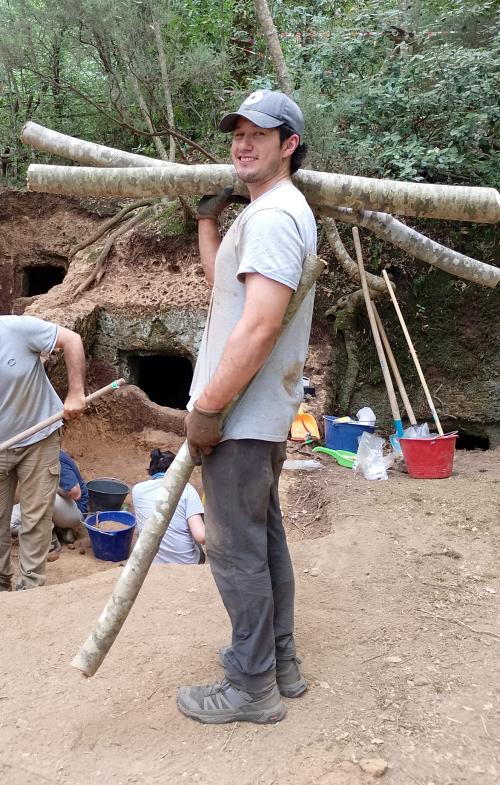
Participation in BISA involves sustained physical activity outdoors in weather conditions that vary according to the season. Participants must therefore be prepared to work safely in heat, cold, wind, rain, and muddy conditions.
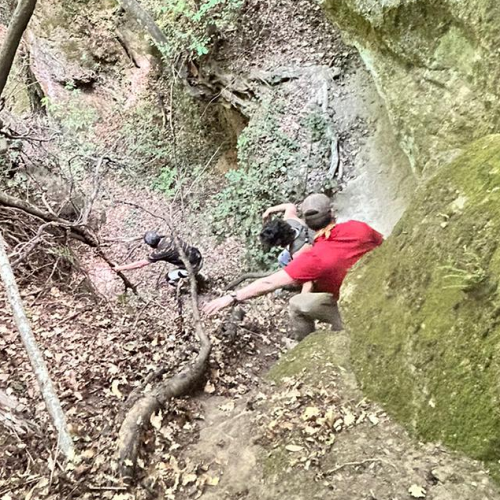
Activities may include working outdoors for a full day, using hand tools, hiking across uneven terrain and woodlands, kneeling, crouching, bending, lifting, shoveling, pushing loaded wheelbarrows, carrying equipment, and spending extended periods in a squatting position or on hands and knees. Participants should be able to lift up to 25 kg (55 lbs.).
All accepted participants must provide a certificate of physical fitness for the planned activities, signed by a licensed medical professional. The certificate should confirm that the participant is physically able to undertake the activities described above.
The certificate must not include diagnoses, medical history, or other clinical information that is not strictly necessary.
Participants should provide ACT only with information concerning allergies, dietary requirements, health conditions, or other circumstances that are strictly necessary to organize activities safely, make appropriate arrangements, or respond to an emergency.
Health-Related Information and Confidentiality
Within ACT, complete access to health-related documentation is limited to the President and legal representative. Staff members receive only the information strictly necessary to protect participant safety, make appropriate arrangements, or respond to an emergency.
Health-related documentation is stored separately or with specifically restricted access and is deleted at the end of the participant’s session and, in all cases, within fifteen days.
Further information is provided in our Privacy Notice.
Required Vaccinations
Because archaeological fieldwork may involve contact with soil and sharp objects, all participants must provide proof of a valid and up-to-date tetanus vaccination.
ACT does not currently require proof of any other vaccination.
Clothing and Equipment
Weather conditions vary considerably by season. Summer sessions may involve hot, sunny weather, with temperatures occasionally exceeding 35°C (95°F), while fall, winter, and spring can bring cold temperatures, rain, wind, and muddy field conditions. Even during the warmer months, mornings and evenings may be cool. Before traveling, participants should check the forecast and bring layered, weather-appropriate clothing, including waterproof outerwear.
Remember to bring:
- Comfortable shoes for travel, excursions, and other non-field activities
- All personal medications (if you have prescription medication, it is a good idea to keep a copy of your doctor’s prescription with you, and to verify the requirements for carrying the medication on international travel).
- Basic school supplies
Clothes for Field Work
Clothes worn in the field will become dirty, stained, or damaged.
- Durable work gloves (required and supplied by the participant)
- Comfortable, flexible, and durable long pants (shorts are not allowed in the field)
- Shirts suitable for working outdoors all day (having a lightweight long-sleeve shirt with you for protection from the elements is a good idea)
- Broken-in, ankle-high work boots with a steel or composite protective toe cap (required and supplied by the participant)
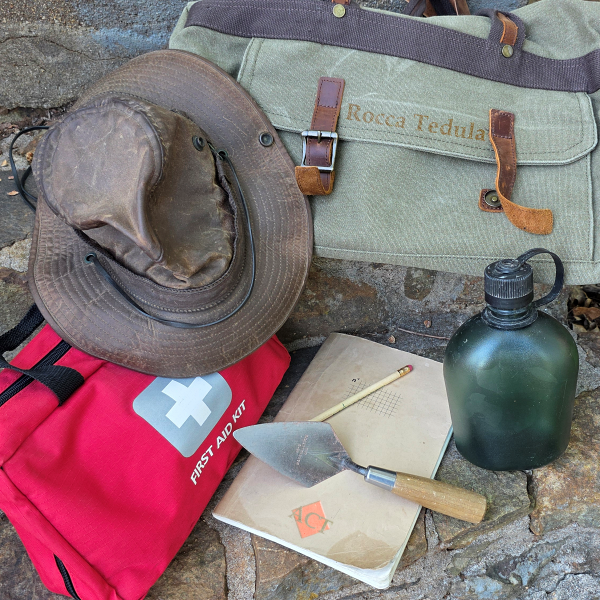
Important note: Do not wait until the last minute to buy boots! Buy them a few weeks in advance and wear them regularly to break them in and verify that they will not cause pain or blisters. - Hat (wide brim recommended)
- Bandanas (useful for sun protection, cleaning sweat and dirt, or for dust protection)
- Good socks:
Lightweight, good-quality merino wool socks are an excellent option for comfort, durability, and moisture management. Two excellent brands in the U.S. are Darn Tough and Farm to Feet.
Archaeology Tools and Field Gear
- Archaeology or masonry pointing trowel (Optional):
Although bringing your own trowel is optional, the trowel is an archaeologist’s most essential tool. If you intend to continue your studies and career in archaeology, you should eventually acquire one. A Marshalltown London-style trowel is a well-known and generally accepted option for archaeologists (See the BISA Instagram for a more detailed discussion). - Field journal and writing supplies
- Sunscreen
- Insect repellent
- Water bottle, canteen, or flask
- Backpack
- Cell phone or digital camera (one equipped with LiDAR sensors is a bonus)