2026-27 Archaeology Field School Campaign
BISA
In Short
WHO?
Students in Archaeology, Classics, Medieval Studies, History, Art History, Anthropology, Cultural Resource Management, Museum Studies, and related disciplines.
WHAT?
An International School of Archaeology where students gain practical experience in archaeological excavation, survey, and research.
WHERE?
Sorano, Tuscany, Italy
WHEN?
Throughout the year, with seasonal sessions in fall, winter, spring, and summer.
WHY?
To learn excavation techniques, stratigraphic analysis, survey methods, applications of the latest technologies, and the theoretical approach of landscape archaeology while working in a region rich in culture, history, and natural beauty.
HOW?
By joining us! Read all the information on this website, then Submit an Application!

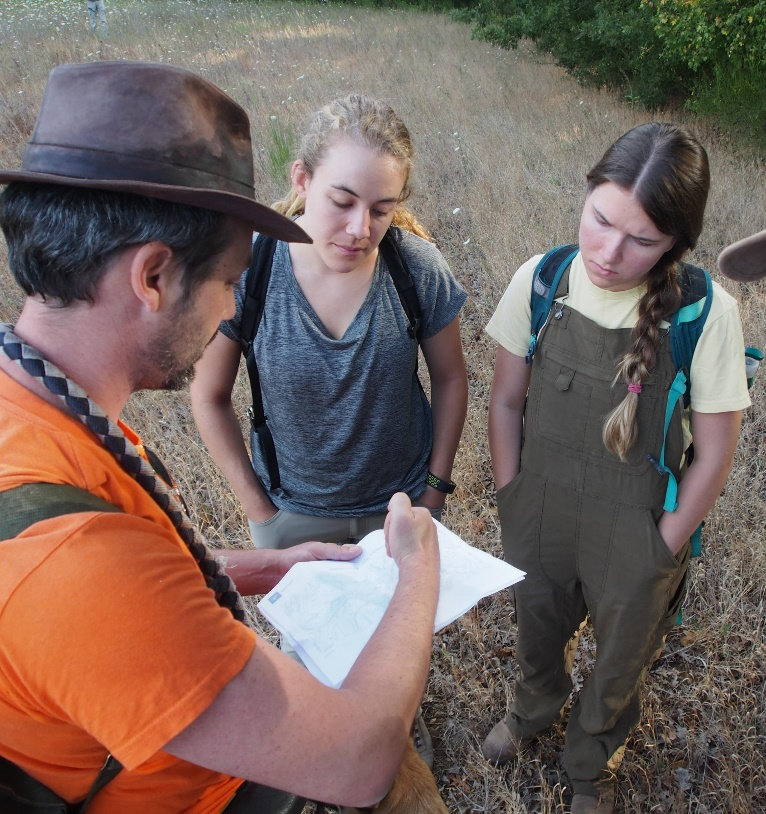
This program is offered in collaboration with the Superintendency of Archaeology, Fine Arts and Landscape for the provinces of Siena, Grosseto and Arezzo, a territorial office of the Ministry of Culture.
The Archaeological Site
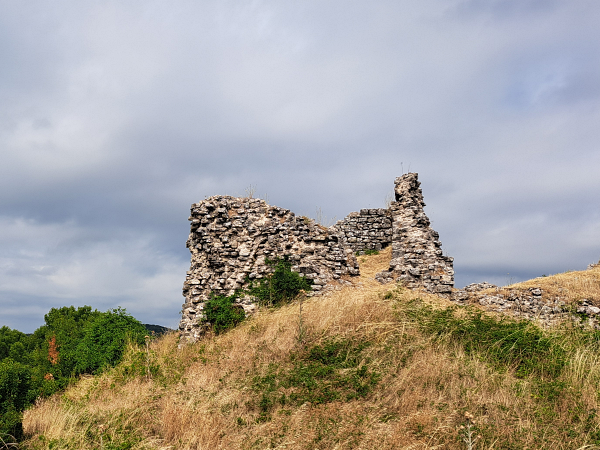
Although we are engaged in multiple research projects, the 2026-27 Campaign will continue our investigation of Rocca Tédula. This twelfth-century castle and military fortification has a storied history of conflict, siege, and changing ownership. Its military role gradually declined between the late fifteenth and early sixteenth centuries.
Rocca Tédula (also called Rocca di Montevitozzo) has been a landmark and historic emblem for the people of Montevitozzo for centuries. Untouched by archaeologists until local residents invited us to open an excavation in 2025, we are working hand-in-hand with the local Montevitozzo community to secure this important cultural landmark against the threat of outside development pressures.
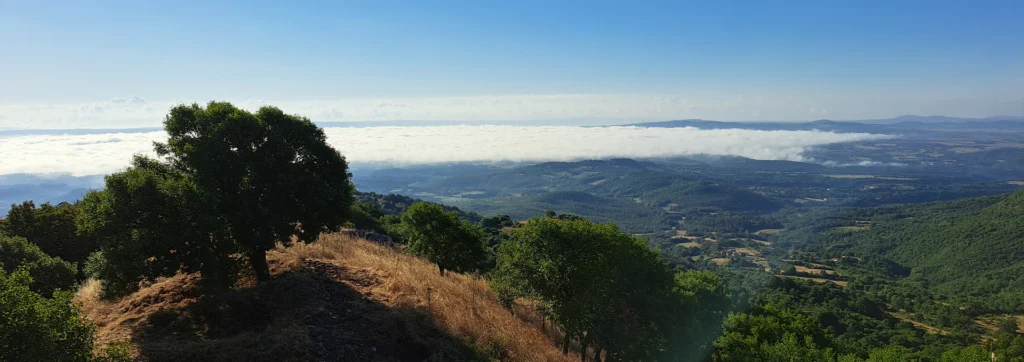
Our students have an exciting opportunity to examine the realities of daily life at a medieval Italian castle complex while enjoying the most breathtaking panoramic views in all of Tuscany!
Session Dates
| Session | Dates |
|---|---|
| Fall | October 16-30, 2026 |
| Winter | February 19-March 5, 2027 |
| Spring | May 14-28, 2027 |
| Summer First Module (2 weeks) | July 9-23, 2027 |
| Summer Full Session (4 weeks) | July 9-Aug. 6, 2027 |
| Fall 2027 | September 24-October 8, 2027 |
The 2026–2027 Seasonal Campaign includes five seasonal sessions, organized into six two-week modules. The Fall 2026, Winter 2027, Spring 2027, and Fall 2027 sessions each consist of one two-week module. The Summer 2027 Session consists of two consecutive two-week modules.
Students attending the Summer Session for two weeks only must enroll in the First Module. The Second Module is available only to students attending the full four-week Summer Session.
For more thorough training, we recommend attending at least two modules. This is particularly convenient in the Summer Session, when the two modules are consecutive.
Students who complete three modules, even over two different years, will have the opportunity, if they wish, to access advanced content and participate in research projects.
Objectives
Safeguarding our archaeological heritage begins with its thorough investigation and meticulous documentation. This ambitious Public Archaeology project will immerse students in both the archaeology of architecture and the study of landscape archaeology, offering hands-on experience with the most advanced techniques in survey and digital reconstruction.
In addition to conducting a traditional archaeological excavation of the stone structures near the castle tower, participants will work alongside experienced archaeologists to gain practical skills in the archaeological applications of Geographic Information Systems (GIS) and Building Information Modeling (BIM). We hope to deepen students’ understanding of military architecture, siege warfare, and the lives of the soldiers and villagers that supported the castle community.
Through this integrated approach, we aim to protect Rocca Tédula for future generations, strengthen the bond between the community and its heritage, and enhance our archaeological understanding of this region’s fascinating medieval past. In the process, we hope to foster a shared sense of stewardship and identity with the local community.
2026–2027 Objectives
- Continued excavation of Rocca Tédula, including both the fortified complex and the surrounding medieval settlement.
- Progressively developing an integrated digital twin through laser scanning, photogrammetry, GIS, and archaeological data.
- Systematic archaeological survey of the Sorano territory, aimed at identifying, mapping, documenting, and interpreting previously unknown or poorly recorded archaeological sites and landscapes from Prehistory to the Renaissance.
- Salvage archaeology and heritage protection, including the rapid assessment, recording, and digital documentation of archaeological evidence at risk from development, erosion, environmental processes, or other forms of landscape transformation.
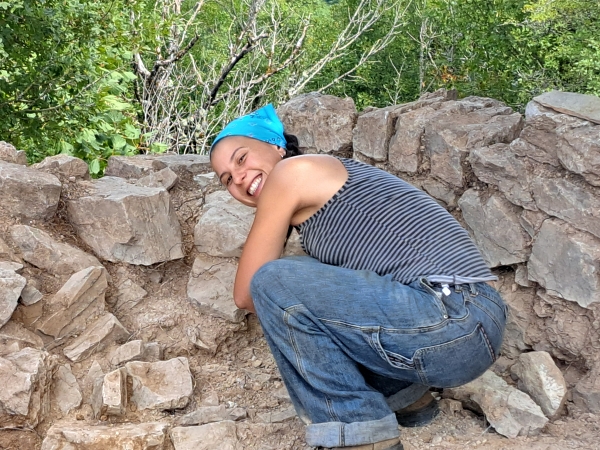
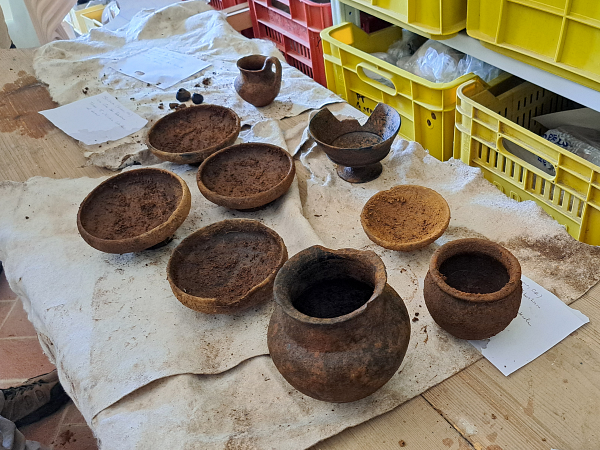
Specific research targets at Rocca Tédula will include the continued excavation of the building uncovered in summer 2025 and 2026 (currently interpreted as being associated with craft activities) and the investigation of structures belonging to the surrounding medieval village.
Field Activities: How We Accomplish Our Goals
We invite participants to learn archaeology where it lives: across the varied spaces of a medieval castle and its surrounding landscape.
Archaeology of Architecture
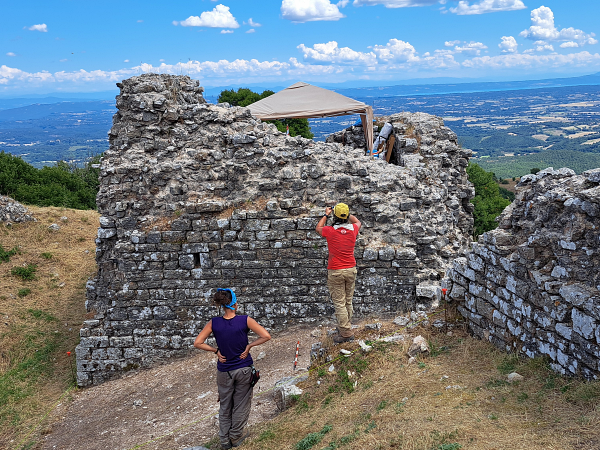
In the gatehouse, keep, and along the curtain walls, students will practice the Archaeology of Architecture. Using carefully measured drawing, close-range photogrammetry, and terrestrial laser scanning, participants will read masonry fabrics, trace building phases, map tool marks and putlog holes, and record construction joints.
In the cellars, cisterns, and other domestic structures of the medieval village, students will apply stratigraphic excavation and environmental sampling to reconstruct domestic activities, storage, and water management.
In workshops and courtyards, participants will investigate craft activities, residue traces, and circulation routes.
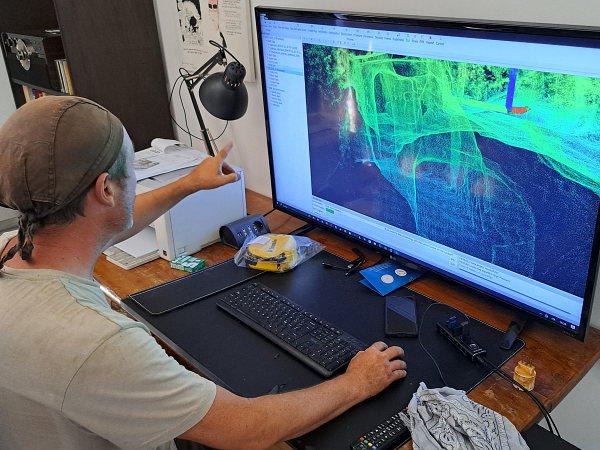
Throughout our work, digital documentation is integral rather than an add-on. Students will build georeferenced point clouds and orthomosaics, manage spatial data in GIS, and structure architectural information in BIM to produce a 3D/4D record that captures phases, materials, and interventions over time.
Landscape Archaeology
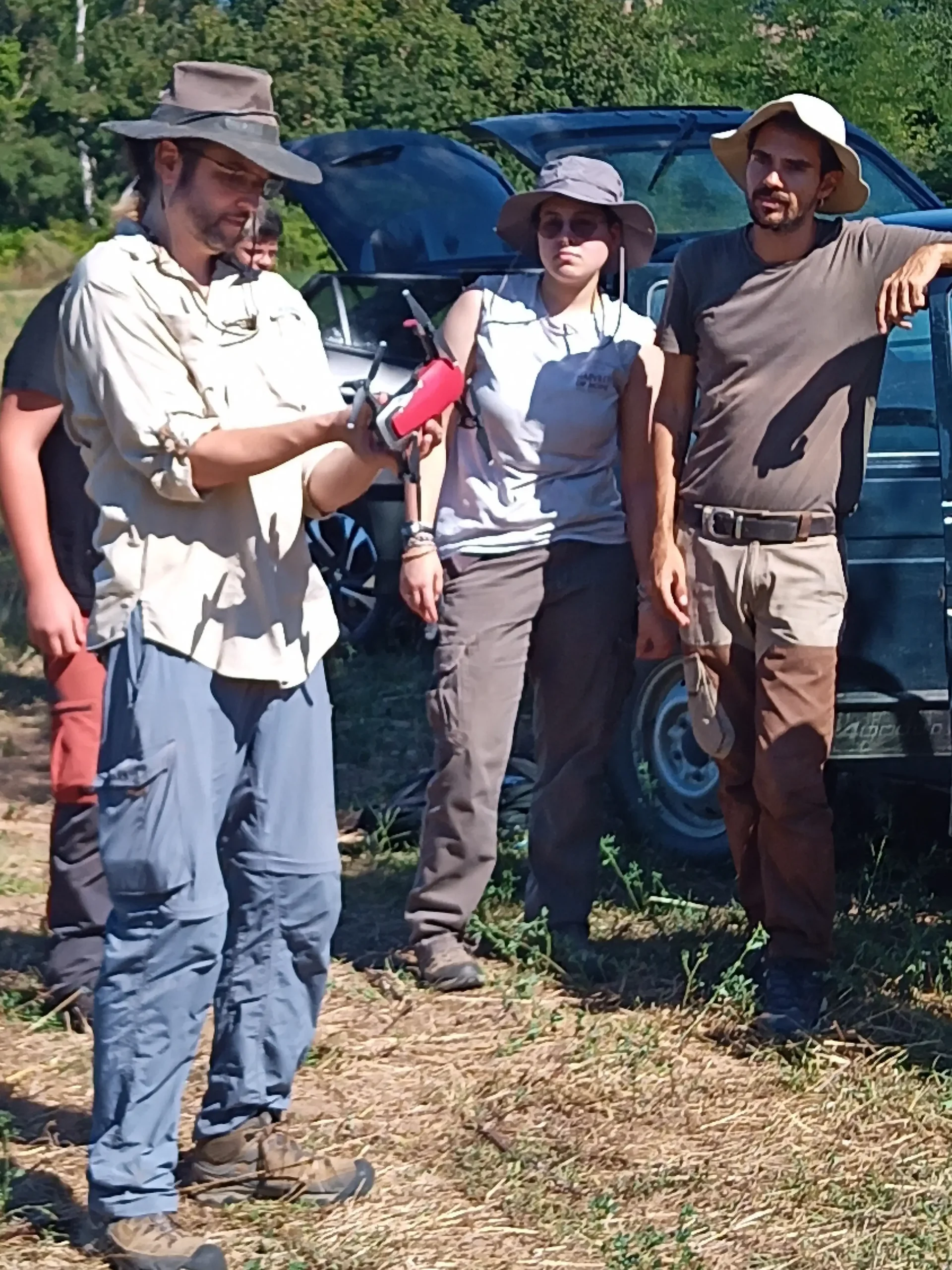
Landscape Archaeology extends these lessons beyond the ramparts: fieldwalking, drone mapping, and LiDAR-derived terrain models are combined with historical cartography to chart other archaeological sites, vie cave (ancient rock-cut roadways), pasture lines, quarries, mines and sightlines, situating the castle within its diachronic network of roads, ressources, and powers.
They will use rigorous metadata, controlled vocabularies, and archiving workflows so results are transparent and reusable.
Instruction, Interpretation, and Documentation
By integrating building archaeology, landscape analysis, and end-to-end digital recording, the field school helps students develop a transferable toolkit for research, conservation, and public engagement.
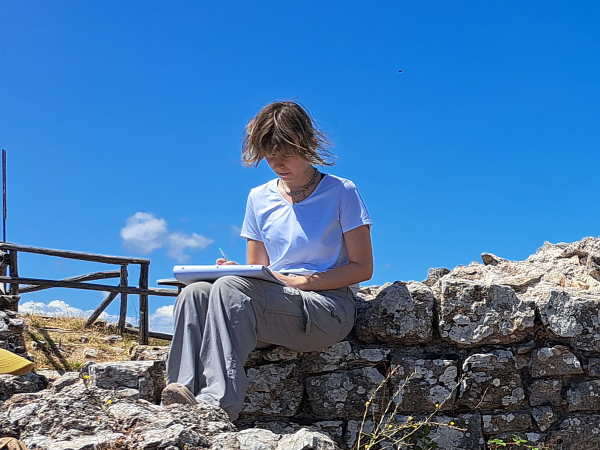
Daily practice reinforces good methods. Keeping field journals, completing catalog sheets, conducting on-site interpretation sessions, and iterating hypotheses as new evidence accumulates are all skills and habits necessary for professional work.
The trainees will be guided through this new adventure by a team of skilled archaeologists who will explain clearly every aspect of the research process.
Laboratory Activities
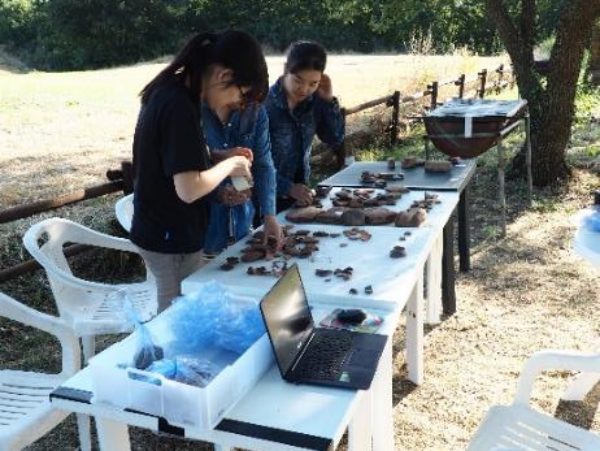
Under the supervision of a staff instructor, laboratories will run parallel to field activities. Typically, lab activities involve small groups of students at a time.
Training in archaeological drawing, pottery analysis, vSLAM, SLAM, GIS, and open-source archaeological recording systems will be provided. Depending on the needs of the field research, laboratories may add other topics. The archaeology of standing buildings, metal find preservation, anthropological analysis, and other topics are all possible.
Classroom Instruction and Didactics
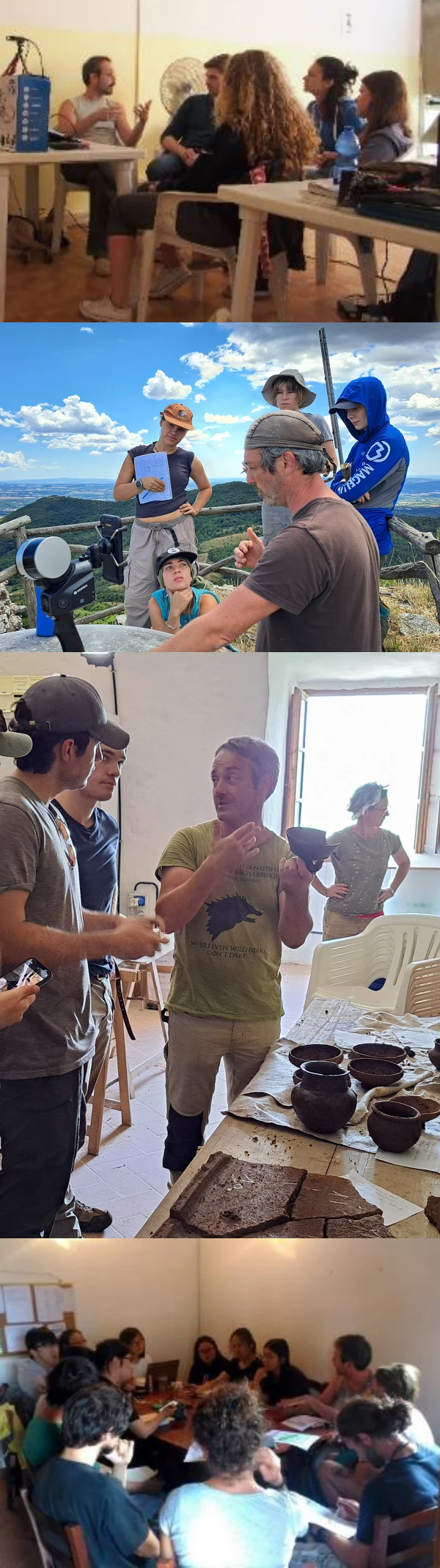
Training future archaeologists is one of our primary missions. Throughout the field school, we weave training and instruction into all of our activities. Our team of multilingual archaeologists will clearly explain every aspect of the work, answer questions, and engage in dialogue. English is the official language of the school, but Italian and French may also be spoken.
Lecture topics will vary with the focus and demands of each session’s field research.
Topics for 2026-27
The field school sessions in the 2026-27 campaign may include lectures on:
- Orohydrographic and geological features
- Historical environment
- Archaeological context of the region
- Landscape archaeology
- Regional history
- Theory and methodology of stratigraphic excavation
- Remote sensing and non-invasive survey
- GIS, SLAM, LiDAR, and photogrammetry
- Analysis and conservation of artifacts and finds
- Public Archaeology
(ArcheoAmiata and PLeiAdE) - Stratigraphic methods for standing buildings
- Etruscan cities of the dead
- Wine and oil production
- Lombard smithcraft